
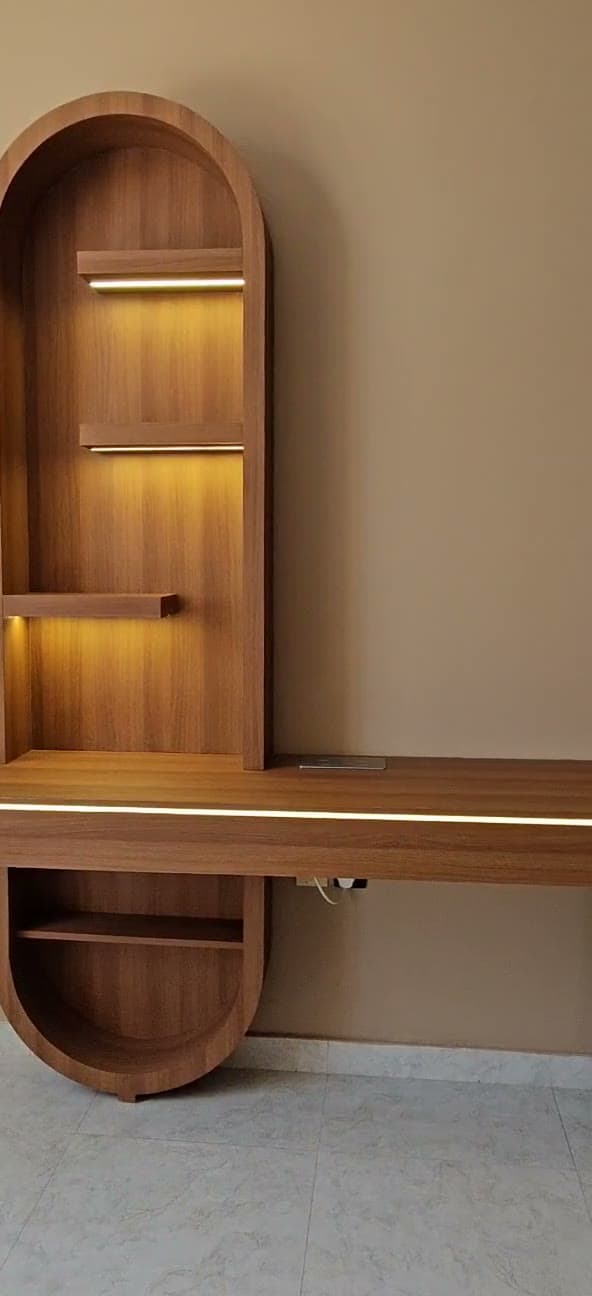
Contemporary interiors lean heavily on hard, cool surfaces — polished stone, glass, brushed metal. Wood plays a different role in that mix: it's warm to the touch, it ages visibly, and no two grain patterns are identical. That's exactly what makes it valuable in a space that's meant to be lived in, not just looked at.
It's also unusually flexible. The same material can sit behind a sharp, minimal cabinet front or a heavily detailed panel — the character comes from how it's cut, joined, and finished, not from the wood alone.
In fitout and furniture work, wood is rarely the whole story — it's paired with stone counters, metal hardware, glass partitions. Its job is to soften everything around it and give a room a sense of scale and warmth that harder materials can't provide on their own.
That balance — practical, tactile, and quietly premium — is why wood keeps a place in interiors that otherwise look nothing like the interiors of ten years ago.